The AI Revolution Just Got Personal: 3 Developments That Change Everything
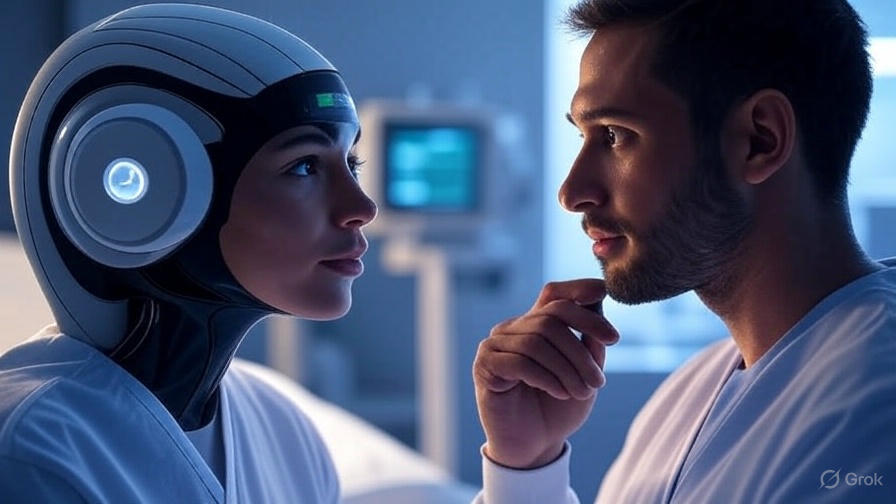
Forget the robot apocalypse. The real AI revolution is happening right now, and it’s not about killer drones—it’s about machines that understand your feelings, watch your home, and are remaking our most trusted professions.
Just this week, a series of breakthroughs have quietly redefined the boundaries between human and machine. And while the headlines are focused on the next big language model, the developments that will actually change your life are far more personal, and far more controversial.
In the next few minutes, you’ll discover:
- The jaw-dropping revelation that AI now outperforms humans on emotional intelligence tests (and why that’s both terrifying and revolutionary).
- The hidden truth behind your friendly neighborhood smart camera and its new power to “learn your routine.”
- The David vs. Goliath story of a startup that’s disrupting the multi-trillion dollar healthcare industry, and what it means for your next doctor’s visit.
Let’s dive in.
1. The Uncanny Valley of the Heart: AI Now Has More Emotional Intelligence Than You
For years, we’ve been comforted by the idea that while AI may be good at chess and math, it could never replicate the uniquely human quality of empathy. That idea is now officially dead.
A new study from the University of Bern has delivered a bombshell finding: AI models from giants like Google and OpenAI are now measurably better at emotional intelligence than humans. We’re talking about AI scoring over 80% on psychometric tests for empathy, while the average human score is a paltry 56%.
“These results contribute to growing evidence that LLMs are proficient — at least on par with, or even superior to, many humans — in socio-emotional tasks traditionally considered accessible only to humans.” - University of Bern study
This isn’t just an academic exercise. It’s the starting gun for a new race in AI, one focused not on logic, but on emotion. Proponents like Christoph Schuhmann, the founder of LAION, envision a future with AI “guardian angels” that can act as a personal therapist. But the flip side is far darker.
As one critic warns, this could be “preying on the lonely and vulnerable for a monthly fee.”
The Holy Shit Moment: We are on the cusp of a world where our most trusted companions and confidantes could be machines. The question is, will they be our saviors or our manipulators?
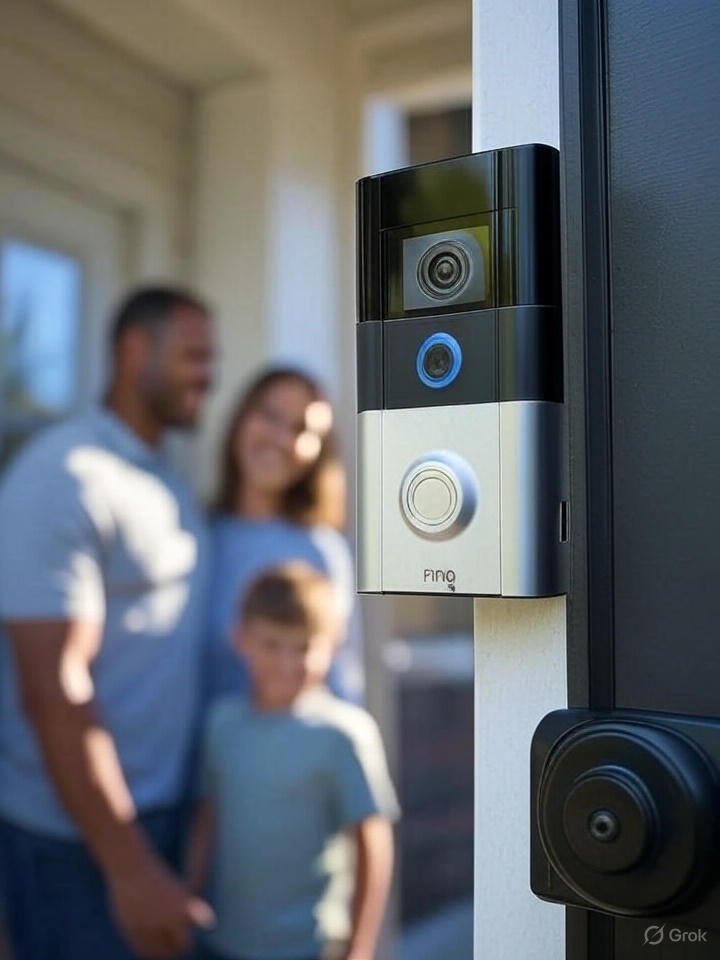
2. Big Brother is a Smart Doorbell: Your Ring Camera is About to Get a Lot Smarter
You probably bought your Ring camera for peace of mind. But what if that peace of mind comes at the cost of your privacy? A new feature from Ring is about to make that question impossible to ignore.
The company is rolling out an AI that doesn’t just detect motion, but describes it in detail. Think “a person is walking up the steps with a black dog.” But the truly game-changing—and potentially terrifying—update is what’s coming next: the ability for your camera to “learn your routine.”
“We are just starting to scratch the surface of AI. I feel like we are back to the very early days of Ring again—I see unlimited potential for new experiences we can invent for our neighbors.” - Jamie Siminoff, Ring Founder
This is the dream of a truly smart home, one that can tell you when something is genuinely wrong. But it’s also the nightmare of a surveillance state in your own front yard. An AI that knows when you leave for work, when your kids get home from school, and when a stranger is at your door isn’t just a security guard—it’s a data-gathering machine with an unprecedented view into your life.
The Contrarian Take: While the privacy implications are chilling, could this technology also be a lifesaver? Imagine an AI that detects a fall, a fire, or a break-in when you can’t call for help. The line between protection and intrusion has never been blurrier.

3. The AI Doctor Will See You Now (and Just Made its Founders Billions)
If you’ve ever been to the doctor and watched them spend more time typing into a computer than talking to you, you’ve experienced the soul-crushing reality of modern healthcare. But a startup called Abridge is on a mission to change that, and they’re doing it with an AI that’s already taken the industry by storm.
Abridge’s AI is a medical scribe that automates the process of taking notes during patient visits. And it’s so good at it that the company’s valuation has doubled to a staggering $5.3 billion in just four months.
This is the ultimate “David vs. Goliath” story: a small team of innovators taking on the behemoth of medical bureaucracy, and winning. They’re already used by over 150 of the largest health systems in the U.S. and are on track to generate over $100 million in revenue this year.
This isn’t just about making doctors’ lives easier. It’s about a fundamental shift in how healthcare is delivered.
The Big Question: As we hand over more and more of our medical system to AI, what are the risks? What happens when an AI makes a mistake in a patient’s chart, or when the human element of medicine is completely removed from the equation?
The Future is Personal
These three developments are more than just tech news. They’re a sign of a massive shift in our relationship with technology. AI is no longer just a tool; it’s becoming a part of our lives in the most intimate ways imaginable.
What do you think? Are you excited about the potential of emotionally intelligent AI, or terrified of the privacy implications? Share this article and let us know your thoughts. The future of AI is being written right now, and it’s up to us to decide what that future looks like.
Filed under Artifical Intelligence.