Fingerprinting AI Art Is the New Biz Markie Ruling
hatch
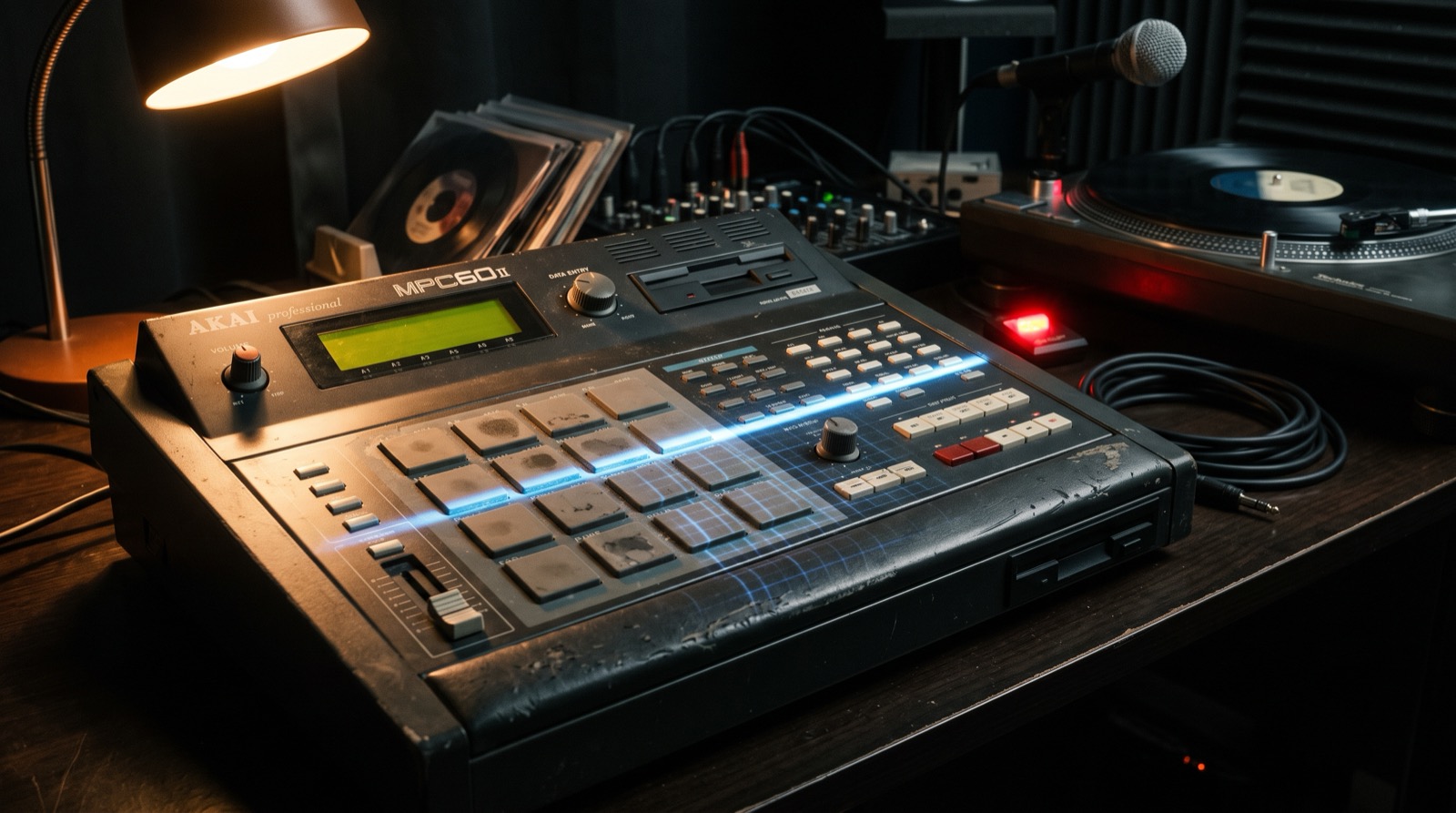
In 1991, a federal judge ruled that Biz Markie’s use of a Gilbert O’Sullivan sample was theft, full stop — and for the better part of a decade, hip-hop producers had to clear a sample before they could trust it wouldn’t end their career. The technique wasn’t illegal. But the presumption around it changed overnight, and the presumption did more damage than the ruling.
Thirty-five years later, four companies just did it again — except this time nobody needs a judge. Anthropic, LinkedIn, Google, and Spotify each shipped AI-detection or watermarking infrastructure inside the same two-week window this August, and the early false-positive data says the quiet part out loud: the systems aren’t catching AI slop. They’re catching the most skilled, most adventurous human use of the tools — the hybrid producer, the deliberately un-quantized track, the thing that sounds “too algorithmic” only because it’s good.
Quick roadmap:
- What actually shipped, company by company, and why blurring them together misses the story
- The false-positive evidence: who’s really getting flagged, and why deviation from the norm is exactly what innovation looks like
- The Biz Markie precedent, plus the shorter version of that same fight — painting, PageMaker, Photoshop, spell-check
- What’s structurally new this time: detection isn’t cultural pressure anymore, it’s a product feature that runs before a human ever hits play
- What to actually do about it, and the throughline that never changed: the tool was never the variable
Four companies, four different machines, one fortnight
These aren’t the same system. Don’t blur them together.
Anthropic started embedding a distributional watermark — a statistical fingerprint baked into word choice, invisible to the reader, designed to survive copy-paste and light editing — in everything Claude generates, text and images, for models shipped from August 2, 2026 onward. That’s not a courtesy. It’s compliance: the EU AI Act’s Article 50 transparency mandate took effect that same day, with fines up to €15M or 3% of global turnover, and Anthropic applied the watermark globally rather than geofence it to Europe (TechCrunch, Euronews).
LinkedIn shipped something different in both kind and consequence: a “Seems like AI slop” report button on July 30, 2026, that instantly hides a flagged post, enforcing a “Keeping conversations real” policy published in May 2026 that requires disclosure whenever content is “materially generated or transformed” by AI (LinkedIn, BigGo Finance). One study already puts 81.2% of long-form LinkedIn posts in the “Likely AI” bucket (Originality.AI) — which should tell you the button is going to fire on a lot of humans who just write in a certain register.
Google expanded SynthID — the watermark already stamped across Imagen, Veo, Lyria, and Gemini output, now north of 10 billion pieces of watermarked content as of May 2026 — into Chrome and Search, for real-time labeling at the browser level (DeepMind). This one’s provenance for Google’s own models, surfaced at the point of consumption instead of buried in metadata.
Spotify announced an “AI Persona” badge on August 13, 2026, rolling out mid-September, for artist profiles whose identity — not necessarily their music — appears AI-generated rather than a real person; tagged profiles also get excluded from editorial and algorithmic recommendations (Spotify Newsroom, NPR, TechCrunch).
Two of these — Anthropic, Google — are watermarking their own models’ output for provenance. The other two — LinkedIn, Spotify — are trying to detect and label other people’s uploads for authenticity, with a lot less certainty about what they’re actually looking at. That distinction matters. The timing, on its own, doesn’t. What matters is what happens when a system built for the second job starts behaving like it’s doing the first.
The false positives are landing exactly where you’d expect
Here’s the part that should worry anyone who actually makes things: the detectors aren’t flagging laziness. They’re flagging craft.
Musicians getting caught in AI-detection nets read like a casting call for exactly the artists worth listening to — hybrid producers blending live instrumentation with synthesis, electronic musicians whose whole style is precision, pop tracks that break quantization on purpose, all scoring 80%+ likely-AI on entirely human original work, according to industry reporting on the false-positive problem (iMusician). The pattern isn’t subtle: these tools measure distance from a statistical norm, and distance from the norm is the entire definition of an artist doing something new. A detector trained to flag “too algorithmic” will always flag the producer who’s best at sounding intentional.
Musicians have already started responding the way you’d expect people to respond to a system that presumes guilt: they’re building a paper trail. Timestamped DAW session files, C2PA content credentials, dated voice memos of a song taking shape — a literal chain of custody for being human, assembled before upload, because the alternative is hoping a statistical model agrees you’re real (Chartlex).
Read that back: the people most likely to get flagged as AI right now are the people doing the most human thing you can do with a tool — bending it somewhere it wasn’t supposed to go.
We’ve run this exact experiment before
Biz Markie’s sampling case didn’t outlaw sampling. It just meant sampling now carried legal risk by default, and that chilling effect shaped a decade of production choices — clearance budgets, quieter loops, entire techniques quietly abandoned because the cost of being wrong was a lawsuit, not a bad review.
The same fight, compressed: painters called photography a mechanical cheat before it became its own art form. Desktop publishing — PageMaker — got dismissed as “not real typesetting” by people who’d trained for years to do it by hand. Photoshop launched the “is it still photography” argument that’s still running. Spell-check got accused of making writers lazy right up until it became invisible infrastructure nobody thinks about. Every one of these fights was the same question wearing a different tool: did the machine cheapen the craft, or did it just move where the craft lives?
Every one of those fights, though, was fought in public — critics, juries, cultural gatekeepers arguing it out in real time, with a human somewhere in the loop who could be persuaded.
What’s actually new: the filter moved upstream of taste
That’s the escalation. Sampling’s chilling effect took years and a courtroom. This one ships in a changelog.
LinkedIn’s slop button hides your post instantly, before a single human reader weighs in. Spotify’s badge can shape discovery before a listener’s ears ever get a vote, and now carries an actual recommendation penalty on top of the label. Some platforms — Bandcamp among them — have gone further still, writing policy that treats suspicion alone as sufficient grounds to flag work, with no built-in appeal. That’s not “critics grumbled about Auto-Tune.” That’s a machine standing between the work and the first human who might have loved it.
I wrote back in February about who becomes the J Dilla of AI music — the argument was that the tool never makes the art, taste does, and every generation’s most interesting musicians bent their machines toward something the machine wasn’t built to do (who becomes the J Dilla of AI music). This is the dark mirror of that piece. Taste was always supposed to be the filter standing between raw output and an audience. Now there’s a machine filter running upstream of taste, and it’s tuned — not maliciously, just structurally — to flag exactly the kind of deliberate anomaly that produces genius in the first place. The drunken groove. The broken quantization. The thing that sounds like a mistake until you realize it’s the whole point.
I’ll say the quiet part too: my own posts here carry assisted: true in the front matter, disclosed voluntarily, because I’m inside this system, not throwing rocks at it from outside. That doesn’t make the system right. It makes the stakes personal.
What to actually do about it
Document your process like it’s evidence, because increasingly it is — DAW session timestamps, drafts, voice memos, anything that shows the work happening over time instead of arriving all at once. Learn each platform’s actual standard instead of assuming they’re the same fight: Bandcamp treats suspicion as sufficient, Spotify’s badge targets a fake identity rather than AI-assisted process but still costs you recommendation reach, LinkedIn puts the trigger in any reader’s hand with one click. And hold onto the thing none of these systems can measure: anybody can make forgettable art with a machine or without one. The tool was never the variable. It never was. The artist was.
Translation: the machines built to catch the robots are, for now, best at catching the humans who are doing it right. Sampling survived Biz Markie. Photography survived the painters. This survives too — but only if the people building the detectors remember that a false positive isn’t a rounding error. It’s a career, flagged before anyone got to decide if it was any good.