Who Becomes the J Dilla of AI Music? That's the Only Question That Matters.
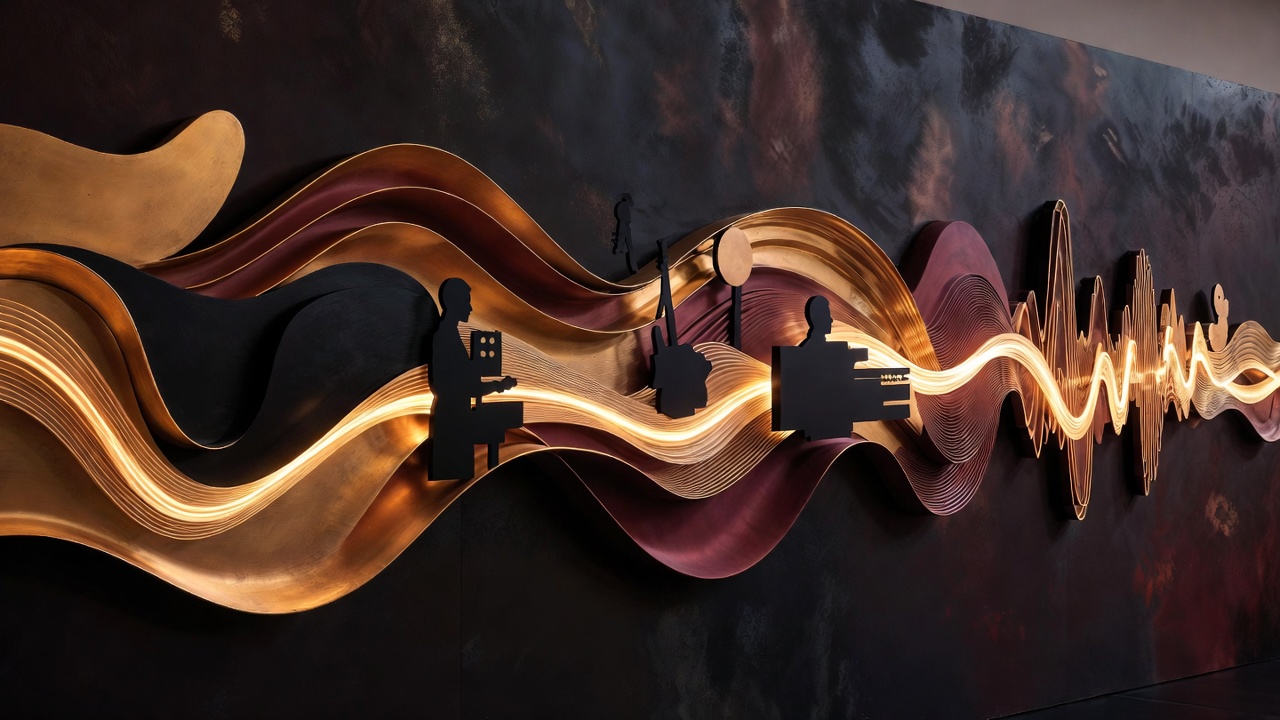
While artists argue about whether algorithms can create “real” music, somewhere right now a producer is learning to use AI the way J Dilla used the MPC 3000 - and that person will define the next decade of sound. The industry already settled the authenticity debate without you: Warner and Universal turned billion-dollar lawsuits into licensing deals, the Beatles won a Grammy for an AI-assisted song, and Apple just embedded machine learning directly into Logic Pro 12. The philosophical question is over. The practical question is everything: who masters this instrument first, and what will they make that nobody has imagined yet? Every revolutionary music technology births a genius who uses it differently than everyone else - Dilla turned off quantization and put his MPC in the Smithsonian, Bambaataa made “Planet Rock” with an 808, Q-Tip sampled jazz and invented A Tribe Called Quest’s entire sonic language. The tool never makes the art, but the right tool in the right hands at the right moment can birth an entirely new form of expression. AI is the most powerful musical instrument ever created. The only question that matters is who picks it up.
Quick roadmap:
- Every music technology births its genius - the MPC had Dilla, the 808 had Bambaataa, Auto-Tune had T-Pain and Kanye
- AI is embedding directly into Logic Pro, FL Studio, and Ableton RIGHT NOW - changing the workflow, not replacing it
- Timbaland generated 50,000 AI songs and discovered the uncomfortable truth about creation vs. curation
- Suno quietly rewrote ownership rules while everyone debated authenticity - you don’t own what you generate
- The industry chose integration in 18 months (faster than any sampling dispute ever settled)
- What separates the next genius from everyone else with the same tools
- What producers need to do right now
The Pattern: Every Tool Creates Its Genius
The Roland TR-808 drum machine shipped in 1980, sold poorly, and was discontinued in 1983. It sounded nothing like real drums - the kick was too boomy, the snare too thin, the hi-hats unnaturally metallic. Session drummers mocked it. Studios ignored it.
Then Afrika Bambaataa made “Planet Rock” in 1982, and the 808’s “flaws” became the foundation of hip-hop, electro, trap, and half of modern pop production. The machine didn’t change. Someone used it differently.
The Akai MPC 3000 was just a sampler and sequencer when it shipped in 1994. Plenty of producers owned one. J Dilla had the same hardware as everyone else. What made him transcendent was turning off quantization - deliberately programming each kick drum 30 milliseconds early, each snare 20 milliseconds late, inventing a “drunken” groove that taught an entire generation of real drummers how to play. His MPC now sits in the Smithsonian alongside Hendrix’s guitar and Coltrane’s saxophone, not because the machine was special, but because he bent it toward something nobody had imagined.
Q-Tip had an MPC too. He used it to sample Lou Reed, Grover Washington Jr., and Eddie Kendricks - not to replicate those records, but to forge A Tribe Called Quest’s entirely new sonic language. The technology was the catalyst. The artistry was the variable.
Auto-Tune launched in 1997 as a pitch correction tool for fixing flat notes. Cher’s “Believe” used it as an obvious effect in 1998. By 2008, T-Pain had turned it into an instrument for emotional expression, and Kanye West built 808s & Heartbreak around heavily processed vocals that sounded nothing like traditional singing. Jay-Z recorded “D.O.A. (Death of Auto-Tune)” in 2009, declaring it dead. By 2025, pitch processing had become as fundamental to pop production as reverb.
The arc is always the same: new tool → fear and mockery → legal resistance → one artist uses it differently → creative explosion → ubiquity. Synthesizers spawned synth-pop, new wave, house, and techno. Samplers created hip-hop. Drum machines birthed electro, trap, and footwork. Auto-Tune enabled a decade of emotional vocal experimentation.
AI is following the exact same pattern, except it’s happening faster. The industry went from “willful copyright infringement at an almost unimaginable scale” to licensing deals in 18 months. The question isn’t whether AI will transform music production - it’s who becomes the first to use it the way Dilla used the MPC.
The 2026 Moment: AI Embedding Where You Already Work
The revolution isn’t happening on standalone generators like Suno that create finished songs from text prompts. It’s happening inside the DAWs where producers actually work - and it’s happening right now.
Apple Logic Pro 12, released January 2026, added two AI-powered features that fundamentally change the production workflow:
Synth Player generates dynamic synth bass (808s, pump patterns) and chord pads (simple/modulated/rhythmic) that respond to Logic’s Chord Track in real-time. You don’t program the synth part - the AI generates a performance that adapts to your harmonic structure. You adjust complexity and intensity like turning a knob.
Chord ID analyzes any audio or MIDI recording and automatically generates matching chord progressions. Drop in a vocal melody, and Logic identifies the harmonic structure, populates the chord track, then drives the AI Session Players to generate bass, drums, and synth parts that fit. It’s a portable music theory expert that operates at the speed of thought.
FL Studio 2025 introduced Gopher, an AI assistant that answers production questions and generates loops across nine genre styles. Ableton Live 12 added real-time stem separation - isolate vocals, drums, bass, guitar, synth, strings, and wind instruments from a stereo file on the fly.
This is the paradigm shift. Standalone generators like Suno position AI as a replacement for the entire creative process - type a prompt, get a finished song. DAW-integrated AI positions it as an augmentation layer - you’re still producing, but the machine handles grunt work, expands your options, and accelerates iteration.
Translation: What if skilled producers could work ten times faster and explore ideas that would normally take hours to test? That’s not replacing artistry - that’s removing friction from the creative process. Dilla still had to imagine the drunken groove. The MPC just let him execute it faster than programming each hit manually on a computer. Logic Pro 12’s AI does the same thing - you imagine the harmonic movement, the AI populates the chord track, you refine and iterate.
One democratizes music creation by removing the need for skill. The other amplifies existing skill by removing tedium. Both futures are happening simultaneously. Which one produces the next genius depends entirely on whether AI becomes a shortcut or an instrument.
Timbaland’s 50,000 Songs: What He Actually Learned
Timbaland has generated over 50,000 songs on Suno in a matter of months. He spends over ten hours daily on the platform. He launched Stage Zero, an AI entertainment company, and debuted TaTa Taktumi - described as the world’s first AI-native pop artist in a genre he calls “A-Pop” (Artificial Pop).
“I probably made a thousand beats in three months, and a lot of them - not all - are bangers, and from every genre you can possibly think of,” he told Rolling Stone.
A thousand beats in three months. For context, Dr. Dre reportedly spent three years producing The Chronic. J Dilla’s Donuts - 31 tracks - took months of intensive work while he was hospitalized. Timbaland just generated more music in ninety days than most producers create in a career.
And here’s what he learned: “You still need the human element. I just use AI to add other elements to my music. It’s 80-85% human.”
That ratio is crucial. Timbaland isn’t using AI to replace his production skills - he’s using it to exponentially expand his creative surface area, then applying human curation and refinement to the tiny percentage worth developing. Generate 50,000 options, identify the 500 that spark something, develop the 50 that have genuine potential, release the 5 that are actually exceptional.
This is the opposite of how previous music technology worked. A sampler didn’t give you 50,000 beats - it gave you a tool to meticulously craft one beat over hours or days. The MPC didn’t generate options - it executed your vision. Auto-Tune didn’t create vocal performances - it corrected the ones you recorded.
AI inverts the creative process: flood the zone with algorithmic output, then apply taste, judgment, and human refinement as the filter. The skill isn’t composition anymore - it’s curation at scale.
But here’s the uncomfortable question: If you generate 50,000 songs using models trained on millions of other people’s music, then selectively apply “the human element” to claim authorship of the 0.01% that sound good - are you producing, or are you panning for gold in someone else’s river?
The technology enables mass production. The ethics remain unresolved. The legal framework is being written in real-time by licensing deals that prioritize monetization over artistic attribution.
TaTa’s voice is AI-generated. The music is AI-generated. The only fully human element in her debut single “Glitch x Pulse” are the lyrics. Timbaland calls it “producing stars from scratch.” Critics call it a ghost in a misguided machine. Both descriptions are accurate.
When engineer Young Guru publicly criticized Timbaland for using independent producer K Fresh Music’s beat to demonstrate Suno without permission, he wrote: “Your voice is powerful and way too important to do anything like this… Human expression can never be reduced to this!”
The tension is real. You can generate unlimited music at near-zero cost. You can curate the best fragments. You can call it producing. But if the models learned from every artist who came before you, and you’re harvesting the statistical output - when does curation become appropriation?
The next genius will have to answer this question with their work, not their words.
The Ownership Trap Nobody’s Talking About
While Timbaland championed AI on Instagram and artists debated authenticity on Twitter, Suno made a quieter change that should terrify anyone building a music catalog on the platform.
Suno’s updated terms of service, published in late 2025, removed the language stating that paid subscribers “owned” the songs they generated. The new documentation takes a different position: even when users are granted commercial use rights, they are “generally not considered the owner” of the songs, because the output is generated by Suno’s system.
Read that again. You can pay $10/month for Suno Pro. You can generate a song. You can get commercial use rights to monetize it. But you don’t own it.
The old policy was clear: subscribers owned their AI-generated music. That language has vanished. What replaced it is a licensing model where Suno grants you permission to use something they fundamentally control.
This is the Instagram/TikTok playbook applied to music creation. You make the content. The platform claims the underlying rights. You get a license to monetize - until the platform decides to change the terms, adjust the algorithm, or sunset the feature.
And here’s the kicker: Starting a subscription after you’ve already generated a great song on the free tier won’t give you retroactive commercial rights. That track you made last week? It’s locked to non-commercial use forever, even if you subscribe today.
If you’re a producer building a catalog on Suno, you’re not building assets. You’re building on rented land. The platform owns the infrastructure, the models, and increasingly, the definition of what “your” music actually means.
J Dilla owned his beats. Q-Tip owned his productions. Timbaland owned the tracks he made in the 1990s. The next genius might not own anything - they might just have a license that expires when the platform’s business model shifts.
This is why the “who” matters more than the “what.” The artist who defines the AI era won’t just master the technology - they’ll navigate the ownership structures, copyright frameworks, and platform economics that didn’t exist five years ago.
The Industry Already Chose Integration
When the Recording Industry Association of America sued Suno and Udio in June 2024 on behalf of all three major labels, the complaint used language you’d expect in a declaration of war: “willful copyright infringement at an almost unimaginable scale,” seeking up to $150,000 per infringing work.
Warner Music Group settled with both companies by November 2025. Universal settled with Udio. Eighteen months from lawsuit to licensing deal.
For context: The 1991 legal ruling against Biz Markie that nearly killed sample-based hip-hop took years to resolve and left the industry in legal chaos for most of the decade. The Napster wars lasted from 1999 to 2001, then another decade of iTunes vs. piracy battles before Spotify finally negotiated sustainable licensing.
This AI settlement happened faster than most producers can finish an album.
The settlement framework mirrors the post-Biz Markie sampling era almost exactly: AI companies will build new models trained exclusively on licensed catalogs, with artists receiving opt-in control over their name, image, likeness, and voice. Current unlicensed models get phased out in 2026. Klay Vision became the first AI company to secure licensing deals with all three majors and their publishing arms.
The speed tells you everything about the industry’s real position. They’re not fighting AI. They’re racing to monetize it before someone else does.
The Beatles won Best Rock Performance in February 2025 for “Now and Then,” making it the first AI-assisted recording to win a Grammy. The Recording Academy’s message: AI as a restoration and production tool is legitimate. Use it thoughtfully, and the industry will recognize the result.
The philosophical debate about whether AI can make “real” art is over. The industry settled it with licensing deals and Grammy awards while artists argued on Twitter.
The relevant questions now are tactical: Who masters the tools first? Who navigates the ownership landscape? Who uses AI to make something genuinely new instead of algorithmically average?
What Separates the Next Genius From Everyone Else
When everyone has access to the same AI models, the same DAW features, and the same generative platforms - when Logic Pro 12’s Chord ID and Synth Player are available to every producer with $200 and a Mac - what separates genius from mediocrity?
The same things that always have:
1. Taste
J Dilla didn’t randomly turn off quantization - he heard a groove in his head that required the machine to work differently. Q-Tip didn’t sample random records - he chose Lou Reed and Grover Washington Jr. because his taste led him to sonic combinations nobody else imagined. Kanye didn’t accidentally use Auto-Tune on 808s & Heartbreak - he chose it because the processed, emotionally distant vocal sound matched the album’s themes of heartbreak and isolation.
When AI can generate unlimited options in seconds, taste becomes the only filter that matters. Timbaland’s 50,000 songs are worthless without his ability to identify the 0.01% worth developing. The algorithm produces the options. The human decides what’s worth hearing.
Brian Eno tested AI generators producing music in his style and found the results “not too bad, but none of it was so good that I thought, ‘Oh my God, I’ve got to release this.’” He warned of a “chasm of mediocrity that it will always want to go into.”
AI’s default output trends toward the statistical center of its training data - the most common chord progressions, the most popular drum patterns, the safest melodic choices. Pushing it toward genuine innovation requires exactly the kind of creative will that has always separated great producers from competent ones.
2. Vision
The MPC 3000 couldn’t imagine the drunken groove. Dilla had to hear it first, then bend the machine toward his vision. Logic Pro 12’s AI can generate chord progressions, but it can’t decide which emotional journey the song should take. That’s still human work.
The next genius won’t be the producer who generates the most AI output. It’ll be the one with the clearest vision of what they want to create - who uses AI to execute that vision faster, test more variations, explore dead ends without wasting days on manual programming.
3. Cultural Understanding
Q-Tip didn’t just sample jazz - he understood the cultural lineage connecting bebop to hip-hop, and made music that honored both traditions while creating something new. Bambaataa didn’t just use the 808 - he fused Kraftwerk’s European electronic sound with Bronx b-boy culture and made “Planet Rock.”
AI can analyze patterns. It can’t understand why those patterns matter, what they mean to specific communities, or how to subvert them in culturally resonant ways. The producers who define the AI era will be the ones who bring deep cultural knowledge to algorithmic tools - who know which traditions to honor, which rules to break, and why it matters.
4. The Ineffable Thing
Nick Cave called AI-generated lyrics “bullshit, a grotesque mockery of what it is to be human,” arguing that “algorithms don’t feel. Data doesn’t suffer.” He’s right. AI can generate technically proficient music. It can’t generate the specific kind of pain that made 808s & Heartbreak resonate with millions. It can’t replicate the joy in Dilla’s off-kilter grooves. It can’t produce the righteous anger in Public Enemy’s production.
The ineffable quality that makes certain music transcendent - the thing you can’t explain but you know when you hear it - remains exclusively human. For now.
The producer who becomes the J Dilla of AI will master the technology while never losing sight of this truth: the tool amplifies vision, taste, and cultural insight, but it can’t replace them.
What Producers Need to Do Right Now
The conversation about whether AI can make “real” music is over. The industry settled it while artists argued on Twitter. The relevant questions are tactical, and the window for early movers is closing fast.
1. Master the DAW-integrated AI tools, not just the standalone generators
Logic Pro 12’s Chord ID and Synth Player will make you a faster producer. Suno will make you a faster content creator. One builds your skill set. The other replaces it.
Learn stem separation in Ableton Live 12. Learn AI mastering in iZotope Ozone 12’s stem-aware EQ. Learn Splice’s AI-powered sample discovery. These tools augment your workflow without replacing your creative judgment. They’re the difference between using AI the way Dilla used the MPC (as an instrument to be mastered) vs. the way most people use Instagram filters (as a one-click replacement for actual skill).
2. Adopt Timbaland’s ratio: 100 generated options for every 1 release
If you’re using generative AI, flood the zone and curate ruthlessly. Generate hundreds of variations. Listen with an ear shaped by deep musical knowledge. Find the three-second fragment that sparks something. Chop it. Layer it. Process it through your own artistic vision until it becomes something that has never existed before.
If your ratio of generated content to released music is anywhere close to 1:1, you’re not producing - you’re uploading. The skill is curation at scale, not generation.
3. Understand the ownership structure of every platform you use
Read Suno’s actual terms of service. Understand that you don’t own the output - you have a license. If you’re building a catalog, diversify across platforms you actually own (your DAW, your sample library, your stems) and platforms that grant genuine ownership.
J Dilla owned his beats. The next genius might just have a license that expires when the platform’s business model shifts. Navigate accordingly.
4. Compete on the things algorithms can’t replicate
Deezer reports 50,000 fully AI-generated songs uploading daily - up from 10,000 at the start of 2025. Spotify has removed over 75 million “spammy tracks.” The signal-to-noise ratio is collapsing.
Being “a producer who can make music” will mean nothing when everyone can make music. The value shifts entirely to artistic vision, cultural understanding, emotional depth, taste, and the ineffable quality that separated Q-Tip from someone who merely owned an MPC.
If you’re competing on technical production quality alone, you’re already obsolete. AI will match you by 2027. Compete on the things algorithms can’t replicate: genuine emotion, cultural insight, narrative depth, and the ability to make people feel something they’ve never felt before.
5. Move fast
Every music technology revolution has an early-mover window where a handful of producers define the sound before it becomes ubiquitous. Bambaataa made “Planet Rock” in 1982. By 1985, the 808 sound was everywhere, and the pioneers were legends.
Dilla started chopping samples in the mid-1990s. By the early 2000s, his style had influenced an entire generation, and his early work was canonical.
The AI window is open right now. Logic Pro 12 shipped a month ago. Most producers haven’t touched the AI features yet. Suno has 100 million users, but how many are using it the way Dilla used the MPC - as raw material to be chopped, processed, and transformed - instead of as a finished product?
Somewhere right now, a producer is figuring this out. They’re generating hundreds of AI outputs, listening with taste shaped by deep musical knowledge, finding the fragments worth developing, and making something nobody has imagined yet.
That producer will define the next era of music.
The question is whether it’s you.
The Instrument Awaits Its Artist
The tool never makes the art. The Roland TR-808 didn’t write “Planet Rock.” The Akai MPC 3000 didn’t produce Donuts. Auto-Tune didn’t create 808s & Heartbreak. Human beings with extraordinary creative vision used those machines to make sounds nobody had imagined before.
AI is the most powerful musical instrument ever created, and simultaneously the most dangerous. It can generate a passable imitation of virtually any style in seconds, threatening to drown genuine artistry in an ocean of competent mediocrity. It can also, in the hands of a visionary, enable forms of musical expression that are literally impossible without it - real-time adaptive compositions, cross-cultural sonic fusions at a speed and scale no human ensemble could achieve, harmonic experimentation that would take weeks to program manually.
The industry is settling into its new shape. Licensed AI models launching in 2026 will operate within legal frameworks that compensate rights holders. Copyright law is drawing the line between AI as tool (copyrightable when human authorship is meaningful) and AI as autonomous creator (public domain). The economic disruption is real - session musicians and library composers face genuine displacement, and streaming platforms must solve the content flood problem before algorithmic noise drowns human creators.
But none of that determines whether this technology produces its J Dilla.
Somewhere right now, a young producer is using AI not the way Suno’s marketing team imagines - not to generate a finished song from a prompt - but the way Q-Tip used crate-digging and the MPC. They’re generating hundreds of AI outputs. They’re listening with an ear shaped by deep musical knowledge and cultural understanding. They’re finding the three-second fragment that sparks something. They’re chopping it, layering it, processing it through their own artistic vision until it becomes something that has never existed before.
They’re using AI’s generative power as raw material, not as a finished product. They’re treating the algorithm the way Dilla treated his drum machine - as an instrument to be mastered, bent, and ultimately transcended.
That producer - whoever they are, wherever they are - will define the next era of music.
Not the AI. The AI is just the MPC.
The question, as always, is who picks it up.
What to Do Next
If you’re a music producer:
- Master Logic Pro 12’s AI features (Chord ID, Synth Player), FL Studio’s Gopher, and Ableton’s stem separation - these augment workflow without replacing judgment
- Adopt the 100:1 ratio - generate 100 AI options for every 1 you release; the skill is curation, not generation
- Read Suno’s actual terms before building your catalog there - you don’t own the output, you have a license
- Compete on taste, vision, and cultural understanding, not technical production quality (AI matches that by 2027)
- Move fast - the early-mover window for defining the AI sound is open right now
If you’re an artist:
- Lock down your voice and likeness rights in your contracts NOW
- Understand what you control vs. what your label controls (2026 licensing deals give artists opt-in control only if you’ve established those rights)
- Decide your position on AI voice clones before the industry decides for you
If you’re watching this industry evolve:
- The philosophical debate is over - follow the ownership changes and licensing deals, not the authenticity arguments
- The next creative revolution won’t come from the AI - it’ll come from whoever uses it the way Dilla used the MPC
- Every music technology births its genius - the question is who, not whether
Sources & Further Reading
On Logic Pro 12 AI features:
- Logic Pro 12 Launches With AI Features - We Rave You coverage of Synth Player and Chord ID. Insight: DAW-integrated AI augments workflow rather than replacing it - this is the paradigm that produces the next genius.
- Apple Expands Logic Pro’s AI Features - MusicRadar hands-on. Insight: Chord ID as “personal music theory expert” removes friction from creative exploration.
On Timbaland and TaTa:
- Timbaland Introduces AI Artist TaTa - Rolling Stone profile. Insight: 50,000+ song generations reveal AI as prototype engine requiring human curation at extreme ratios.
- Timbaland Unveils AI Entertainment Company - MusicTech coverage of Stage Zero launch. Insight: “80-85% human” ratio shows even AI champions recognize curation matters more than generation.
- Timbaland’s AI Music Project - NPR’s critical analysis. Insight: Young Guru’s criticism reveals unresolved ethical tensions around training data and attribution.
- After Signing with Suno, Timbaland Creates AI Genre - Digital Music News on A-Pop. Insight: TaTa’s music is fully AI-generated except lyrics - testing the limits of what “human authorship” means.
On Suno ownership changes:
- Suno Adjusts AI Music Ownership Terms - The quiet policy shift. Insight: Platform control replacing user ownership - the Instagram playbook applied to music creation.
- Suno Previews 2026 Changes Under Warner Deal - Digital Music News on what’s changing. Insight: Retroactive commercial licensing blocked, subscriber-only monetization emphasis - building on rented land.
On industry settlements:
- Warner Music Group Settles With Suno - The landmark licensing deal. Insight: 18 months from lawsuit to settlement - faster than any previous music copyright dispute, signaling industry’s choice of integration over resistance.
- Warner Settles With Udio - TechCrunch on the Udio settlement. Insight: Both major AI platforms settled within weeks - coordinated industry pivot from litigation to monetization.
- Warner Settles, Broader Industry Trends - ContentGrip analysis. Insight: 50,000 AI songs uploading daily, up from 10,000 at start of 2025 - the content flood is accelerating.
On the Beatles Grammy:
- The Beatles Won a Grammy Thanks to AI - TechCrunch coverage. Insight: Recording Academy validates AI as restoration/production tool when human authorship is meaningful.
- The Beatles “Now and Then” Makes History - Billboard’s analysis. Insight: Industry’s official endorsement of AI-assisted music production, ending the legitimacy debate.
On other artists:
- Grimes Launches AI Voice Model - MusicRadar on Elf.Tech. Insight: 50/50 royalty split treats AI collaborators like human ones, pioneering artist-controlled AI framework.
- Grimes Invites Fans to Make Songs - NPR coverage. Insight: Over 1,000 songs created through platform, demonstrating viable alternative to platform-controlled models.
Filed under AI, Music, Technology.